
From Royal Collections to National Heritage
King Mohammed VI and the Institutional Life of Amazigh Jewellery
Amazigh jewellery has never been merely decorative. In Morocco, jewellery, dress and bodily adornment have historically communicated regional belonging, social identity, gender and community memory. In her research, art historian Cynthia Becker has documented how women’s material arts, including jewellery, textiles and dress, have served as visible expressions of Amazigh identity. 1
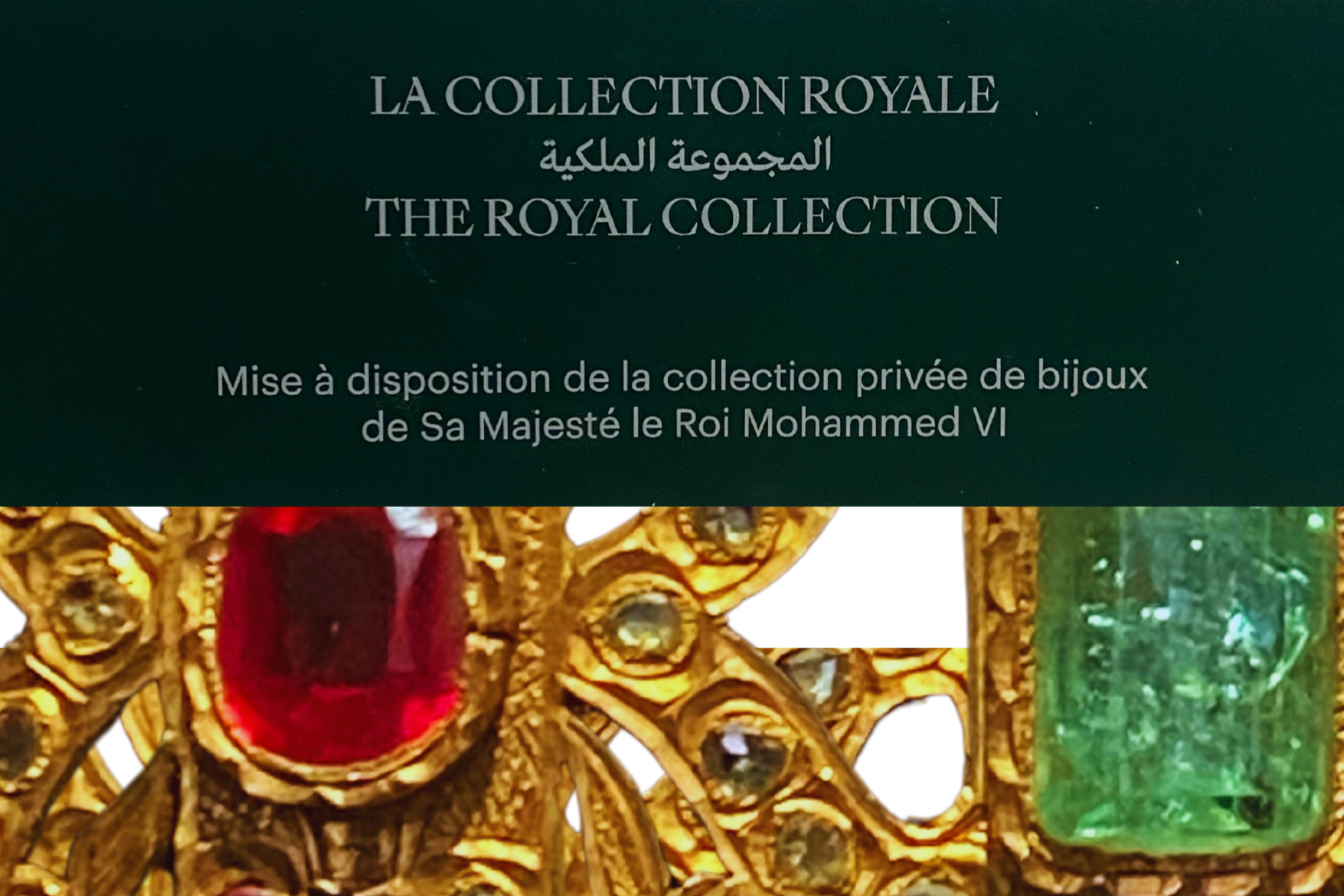
These culturally significant objects, however, do not remain visible and preserved simply because they reflect the culture, or are beautifully made. Their survival depends on choices made for their conservation. These choices include collecting, documenting and exhibiting these objects, as well as determining how their histories will be presented. This is where Morocco’s King Mohammed VI’s treatment of Amazigh jewellery offers an important example of how royal patronage can shape the future of these traditional arts and material heritage. Through preserving Amazigh jewellery as part of his personal collection, making it available for museum display, and supporting its presentation abroad, King Mohammed VI has played an important role in bringing Amazigh jewellery from a private royal collection into national museums and international exhibitions.
From the Royal Collection to the National Museum
The clearest expression of King Mohammed VI’s patronage can be found at the Oudayas National Museum of Adornment in Rabat. The museum opened to the public on 9 January 2023 following the restoration of its historic building and the development of a new permanent exhibition devoted primarily to Moroccan jewellery and dress. Its displays are organised into five sections, including the historical development and production of adornment, Moroccan costume, male jewellery and ceremonial equipment, Amazigh jewellery, and the regional traditions of urban jewellery-making. 2
The National Foundation of Museums states that the museum’s collection was enriched through the availability of King Mohammed VI’s personal collection of Amazigh jewellery. 3 That wording is important, as it signifies that the collection was not necessarily transferred permanently into museum ownership. Instead, objects from the King’s private collection were made accessible through a public institution.
Inside a private collection, an object may be protected and valued but remain visible to relatively few people. Inside a national museum, it becomes part of an organised public narrative. It is displayed alongside other objects, connected to particular regions and traditions, and interpreted within the broader history of Moroccan adornment. The jewellery therefore remains associated with the Royal Collection while also participating in a national account of Moroccan heritage.
Royal Patronage and Institutional Recognition
Royal ownership does not create the cultural value of Amazigh jewellery. The objects already possessed artistic, social and historical importance within the communities that produced, inherited and wore them. Royal patronage can, however, influence the level at which that value is publicly recognised.
When examples of Amazigh jewellery are selected for a royal collection and subsequently displayed in a national museum, they enter one of the country’s most visible institutional frameworks. Their status shifts from locally inherited material culture to objects formally presented as part of Morocco’s shared national heritage. This can be understood as more than an act of collecting. It is also an act of cultural positioning.
The Oudayas museum describes Moroccan adornment as culturally significant and reflective of the country’s regional and cultural identities. Its interpretation emphasises the diversity of forms, materials and inherited techniques found across Morocco. 4 Within this setting, the royal collection helps position Amazigh jewellery inside the publicly presented story of contemporary Morocco: a national story that recognises the country’s different regional histories and cultural traditions.
The collection is particularly significant because much Amazigh jewellery belongs to women’s material heritage. Jewellery accompanied dress, marriage, ceremony, family inheritance and women’s public presentation. By entering a royal collection and national museum, objects historically connected to women’s lives are brought into a highly visible public and institutional space.
From Rabat to Doha
From 20 February to 20 May 2024, the Museum of Islamic Art in Doha presented Berber Jewellery Collection from the Royal Palace, organised jointly with Morocco’s National Foundation of Museums. According to the museum, this was the first time the collection had been exhibited outside Morocco. 5
The exhibition presented jewellery representing different Moroccan regions, techniques, materials and production centres. Its official interpretation paid tribute both to the artisans who created the objects and to the women who had safeguarded the traditions associated with them. 6
Moroccan reporting described the exhibition as comprising approximately two hundred pieces and stated that it was initiated by King Mohammed VI. It opened the programme of the Qatar–Morocco 2024 Year of Culture and was presented as a reflection of the historical relationship between the two countries. 7
The movement from Rabat to Doha gave the collection another identity. In Morocco, the jewellery was displayed as part of the country’s national material heritage. In Qatar, it also acted as a form of cultural representation. The objects introduced international audiences to Moroccan regional traditions, silversmithing, jewellery-making and Amazigh women’s heritage. This is where royal collecting intersects with cultural diplomacy.
The exhibition did not communicate through a formal political statement. Instead, it communicated through material, craftsmanship, beauty and historical depth. The jewellery became a means through which Morocco could present its cultural complexity to audiences abroad.
Giving Heritage an Institutional Future
King Mohammed VI’s patronage of Amazigh jewellery demonstrates how a royal collection can participate in the formation of national cultural memory. By making his personal collection available to the Oudayas National Museum of Adornment, King Mohammed VI enabled objects held in a private royal context to enter sustained public display. Through their presentation in Doha, the pieces also became part of an international cultural exchange. Across these different settings, the meaning of the jewellery continued to expand.
The objects remained expressions of regional craftsmanship and Amazigh identity. At the same time, they became part of a national museum narrative, a royal collection and Morocco’s cultural diplomacy. The significance of this patronage therefore lies not only in preserving the physical objects. It lies in giving them an institutional future in museums, exhibitions, research and public memory.
Notes
Cynthia J. Becker, Amazigh Arts in Morocco: Women Shaping Berber Identity (Austin: University of Texas Press, 2006).
Fondation Nationale des Musées, “Ouverture des Oudayas, Musée National de la Parure,” press release, January 9, 2023, 1. The release describes the museum’s opening, permanent exhibition and five-part interpretive structure.
Fondation Nationale des Musées, “Oudayas, Musée National de la Parure,” accessed July 19, 2026. The museum states that its holdings were enriched through the availability of King Mohammed VI’s personal collection of Amazigh jewellery.
Fondation Nationale des Musées, “Ouverture des Oudayas.”
Museum of Islamic Art, “Berber Jewellery Collection from the Royal Palace,” exhibition webpage, February 20–May 20, 2024, accessed July 19, 2026.
Museum of Islamic Art, “Berber Jewellery Collection from the Royal Palace.”
SNRT News, “Doha: Clôture de l’exposition de bijoux berbères du Palais Royal,” June 5, 2024.
Museum of Islamic Art, “Berber Jewellery Collection from the Royal Palace.”
